

knowledge in Buddhism : ค้นหาหนังสือธรรมะ
หน้าหนังสือทั้งหมด
10
The Search for Knowledge and Freedom from Suffering
the day we lie on our deathbed, facing the reality of our mortal impermanence,
with all our fears returning to confront us once more.
Knowledge or wisdom that reveals the truth has and will always pr
When we confront our mortality, knowledge reveals truth and offers a path to peace. Ignorance leads to fear, prompting the pursuit of wisdom to alleviate suffering. We seek answers to life's fundament
16
The Virtues of a Good Teacher
holdes that knowledge. A good trainer must guide the pupil to utilize knowledge only in a positive and beneficial way. That way, knowledge will be useful not only for the one who possesses that knowle
A good teacher plays a pivotal role in guiding students to use knowledge positively. Essential qualities include understanding the ingredients to effective teaching, instilling good habits, and creati
32
The Complete Teacher: Integrating Academic Excellence and Dhamma in Education
Chapter 3
directly and indirectly so that students can understand and learn thoroughly. This requires trainers who have not only the first level of wisdom, which is from memorization, but also from t
บทนี้อธิบายถึงความสำคัญของครูในฐานะที่เป็นแบบอย่างและการผสมผสานความรู้ทางวิชาการเข้ากับธรรม เพื่อช่วยให้นักเรียนเติบโตเป็นคนดี เนื้อหายังกล่าวถึงระดับความเข้าใจที่พระพุทธเจ้าสอนเกี่ยวกับชีวิต สี่ขั้นต
28
Insights into the Three Cycles and Twelve Components of Suffering
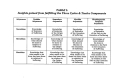
TABLE I:
Insights gained from fulfilling the Three Cycles & Twelve Components
| Ariyasacca | Dukkha Ariyasacca | Samudya Ariyasacca | Nirodha Ariyasacca | Nirodhagamini Patipada Ariyasacca |
| ---
This table outlines insights into suffering through the lens of the Four Noble Truths in Buddhism. Each Ariyasacca component provides a deeper understanding of suffering, including its existence, orig
87
Buddhist Manuscripts in China: Theravāda Buddhism in Sipsong Panna
Buddhist Manuscripts in China: A Case Study of Theravāda Buddhist Manuscripts in Sipsong Panna (Xishuangbanna, Yunnan Province, PRC)
Joe Zhou Ya
China, like many other countries in the world, is a c
This article delves into the rich tapestry of Buddhist culture in China, specifically focusing on the Theravāda Buddhism of the Dai people in Sipsong Panna, Yunnan Province. Buddhism's introduction to
205
Understanding the Noble Truths and the Path to Cessation of Suffering
must be done has been done in relation to Suffering.
3.6 Knowing the Noble Truth of the Cause of Suffering
O! Monks! As a result of practising this Noble Eightfold Path, which gave rise to vision, ins
This text discusses the Noble Truths in Buddhism, specifically focusing on the knowledge related to the Origin of Suffering, the Cessation of Suffering, and the path leading to that cessation. Through
33
True Education: The Path to Enlightenment
TRAINING FOR LIVING AND TRAINING FOR LIFE
The True Goal of Education
True education is akin to an elementary level of achieving three different levels of wisdom or knowledge. The wisdom from listenin
True education encompasses attaining wisdom through listening, analyzing, and ultimately through meditation. The journey to enlightenment involves purifying the mind from kilesa. Just as a fisherman n
27
Understanding the Four Noble Truths in Buddhism
**1. Saccaṇāṇa:** This first cycle of examination of the knowledge of the Four Noble Truths established the knowledge of the Truth of their Existence. Thus he was to find out: 'this is the Noble Truth
This text outlines the process of examining the Four Noble Truths in Buddhism through three cycles: Saccaṇāṇa (knowledge of existence), Kiccāṇāṇa (knowledge of duty), and Kataṇāṇa (knowledge of fulfil
213
Understanding Suffering and Its Origin
aloko udāpadi. must be done in relation to Suffering.
<3.5.3> Ta
This text discusses the detailed understanding of suffering as articulated by monks. It highlights the arising of wisdom, knowledge, and brightness concerning truths about suffering and its origin tha
3
Propagating Buddhism: A Journey Towards Genuine Peace
Preface
Buddhism had been expounded for over 2550 years in various regions throughout the world. Although the practices have been altered according to the climate, tradition, and culture of each area,
In December 2007, 350 Buddhist monks gathered for the 4th WBSY in Bangkok, focusing on unity in Buddhism. Despite cultural differences, they aimed to propagate peace and true happiness through meditat
8
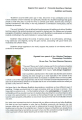
The Role of Buddhism in Society
"Digested from speech of Pramạhā Boonthavy Vilaichakr Buddhism and Society
"Buddhism occurred 2500 years ago in India. Since then it has contributed a lot to the human civilization of both materialit
Buddhism, which originated 2500 years ago in India, has profoundly influenced human civilization both materially and spiritually. Its teachings guide individuals to avoid wrongdoing, purify minds, pro
70
Understanding Buddhism: A Cosmic Religion
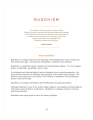
BUDDHISM
‘The religion in the future will be a cosmic religion.
It should transcend a personal God and avoid dogma and theology.
Covering both the natural and the spiritual, it should be based on
Buddhism, founded by the Buddha over 2,500 years ago, emphasizes freedom from suffering and is based on logical, practical principles. This religion transcends blind faith and superstitions, making it
191
The Impact of Media on Buddhism and Monastic Life
they should keep in mind that the Sangha Council has
jurisdiction over a monk's case. When a final judgment is
made, people should not criticize or comment on it. If people
do, in Buddhism it is consi
The text discusses the jurisdiction of the Sangha Council over monk cases and the implications of negative media coverage on Buddhism. It emphasizes that while the press reports on misconduct by some
85
Academic Studies on Buddhism
Mus, Paul. Barabudur: Sketch of a History of Buddhism Based on Archaeological Criticism of the Texts. New Delhi: Indira Gandhi National Centre for the Arts: Sterling Publishers, 1998.
Need, David Nort
This collection features key academic contributions to the study of Buddhism, drawing from archaeological criticism, doctrinal analyses, and comparative studies between traditions. Works by notable sc
7
The Role of Buddhism in Society and Unity among Traditions
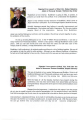
Digested from speech of Most Ven. Daijyo Nakajima
Abbot of Honryuji Temple / Nichiren-Sye Order
"Buddhism is from internal. Buddhism is going to help, to protect, to prevent our world from the conflic
The speeches of Most Ven. Daijyo Nakajima and Most Ven. Trish Han Tan highlight the significance of Buddhism in fostering peace and addressing societal challenges. Nakajima emphasizes Japan's civiliza
9
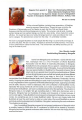
Buddhist Unity and Harmony: Insights from Most Ven. Dhammapriya Mahathero
Digest from speech of Most Ven. Dhammapriya Mahathero Abbot, Mahananda Sangharaj Vihara
Vice President of the Supreme Sangha Council of Bangladesh
Founder of Dhamapriya Buddhist Welfare Mission, Kolka
In a profound address, Most Ven. Dhammapriya Mahathero emphasizes the interconnectedness of all beings, portraying them as part of one family, deriving from shared karmic categories. He urges the prop
14
Author's Preface on the Uniqueness of Buddhism
Author's Preface
Buddhism is unique in teaching a way to overcome suffering, with its aim definitely to liberate oneself from the Cycle of Existence [vadda-samśāra] thereby attaining the highest eter
The Author's Preface highlights Buddhism's distinctive qualities in teaching ways to alleviate suffering and attain ultimate happiness, emphasizing its systematic approach to teachings and virtues. It
51
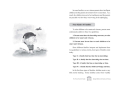
Raising Children to Be Smart and Virtuous
In some families, we see virtuous parents have intelligent
children, but the parents do not know how to raise them. As a
result, the children turn out to be troublesome and the parents
are puzzled ove
In families, virtuous parents may have intelligent children but struggle with proper upbringing. Successful child-rearing depends on parents having knowledge and time. The text identifies four types o
60
Dhammakaya Knowledge: The Five Aspects of Natural Law
The Dhammakaya Knowledge (Vijja10 Dhammakaya) is a profound knowledge that deals with the ‘Five Aspects of Natural Law’, the Law that governs all things. They include Biological Law, which governs all
The Dhammakaya Knowledge (Vijja10 Dhammakaya) focuses on the Five Aspects of Natural Law, including Biological, Chemical, Psychic, Karmic Laws, and the Law of Cause and Effect. This knowledge reveals
206
Knowledge of the Path to Cessation of Suffering
3.8.1 Dukkhanirodhagāminī Saccāṇa: Knowledge of the existence of Path to the Cessation of Suffering.
3.8.2 Dukkhanirodhagāminī Kiccaṇāṇa: Knowledge of what must be done in relation to Path to the Ces
This text discusses the twelve stages of the Cycle of Examination derived from the Four Noble Truths and their relation to enlightenment. It elaborates on the three circuits: knowledge of existence, k